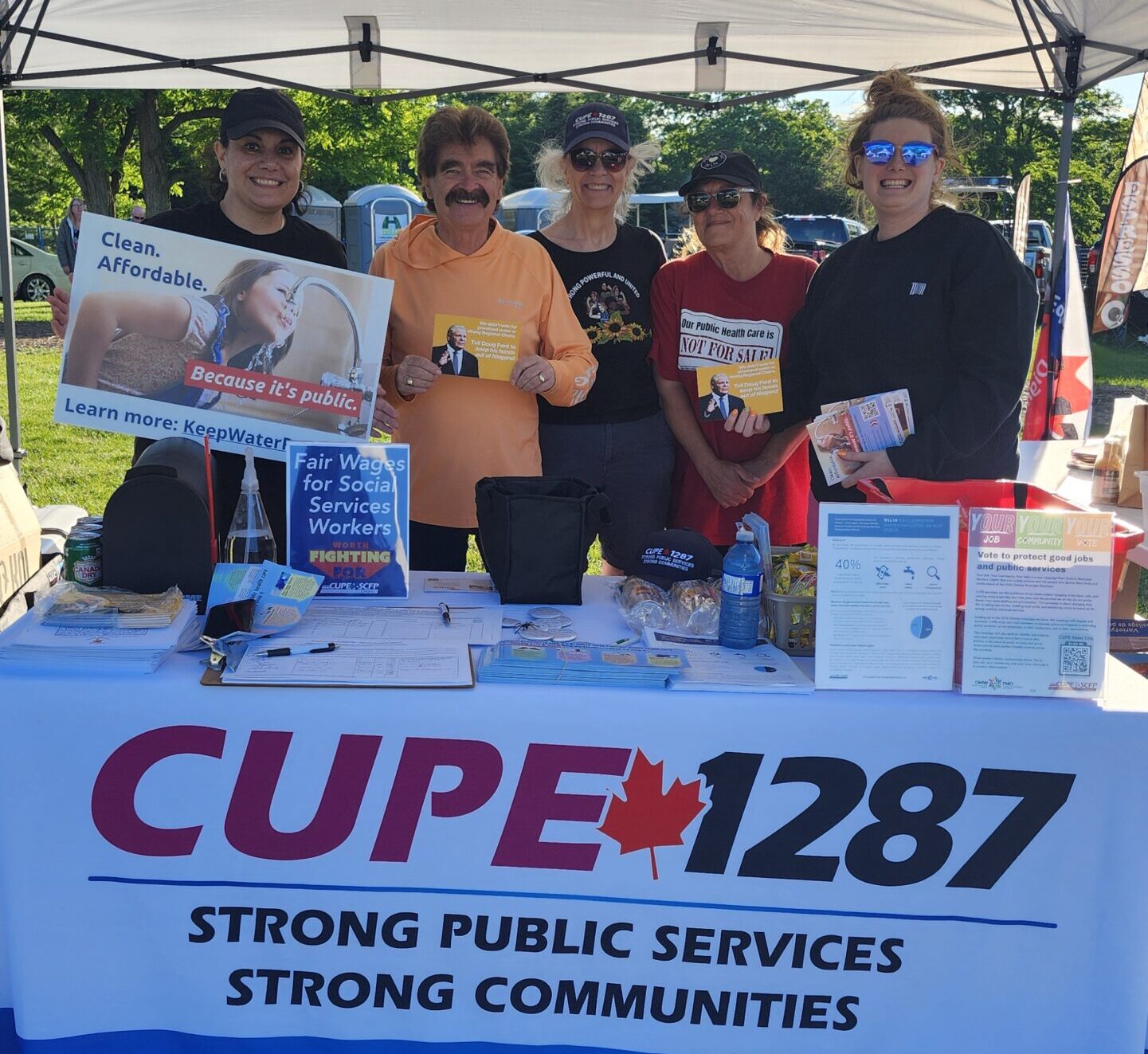
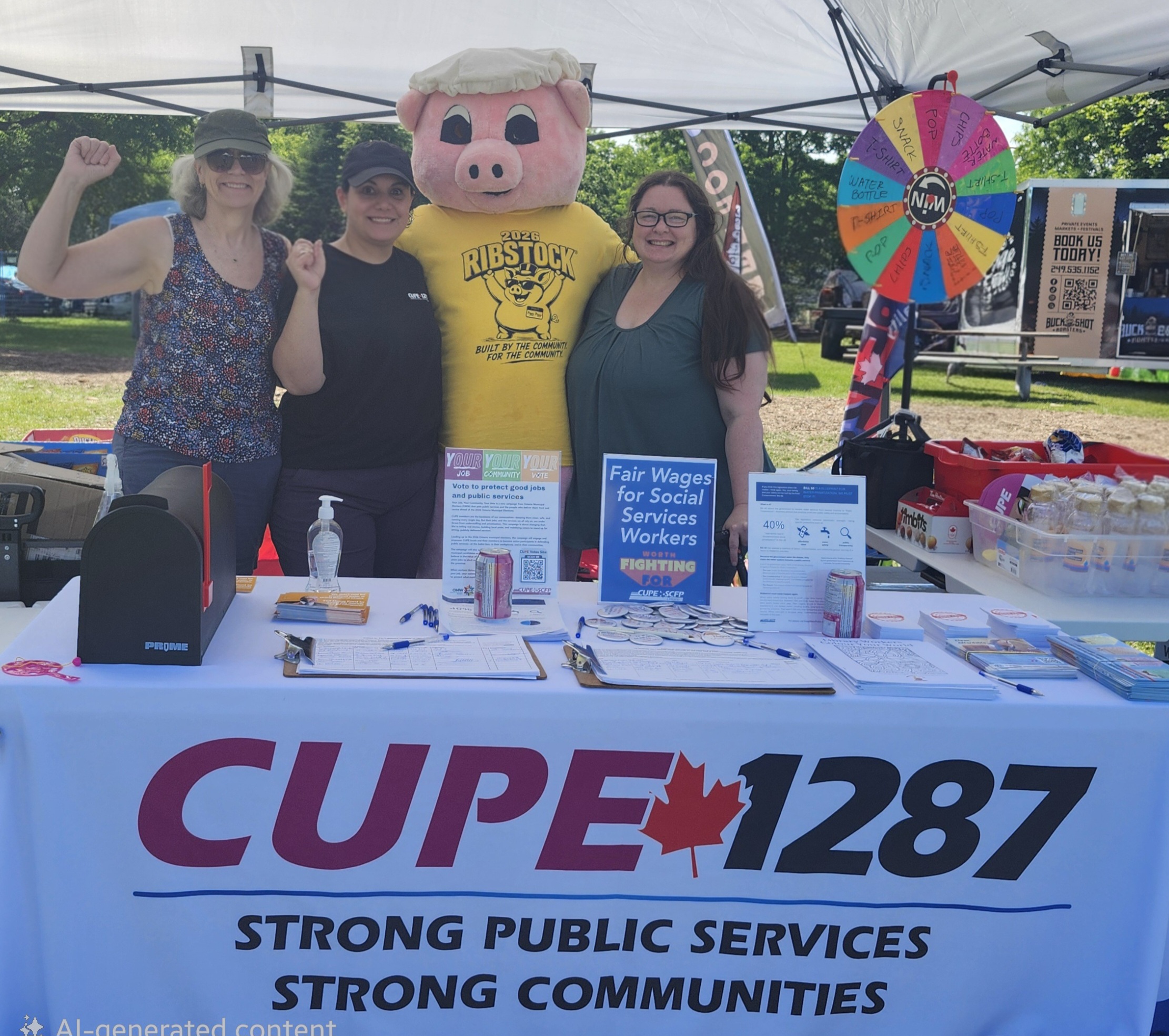
This past weekend (Friday, July 19, – Sunday, July 21), CUPE 1287 members and other supporters of Strong Communities – Strong Public Services put the time in showcasing the important work we all do in the community.
450 petitions were signed, hundreds of fliers and information sheets distributed, the public educated on the services in danger of privatization and the community members who provide those services.
Bill 98 and Bill 100 – the privatization of water and strong chair powers were the main focal points, but other issues that concern our community were also discussed.
A big thank you to all members who volunteered to make this a success!
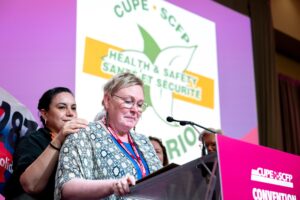
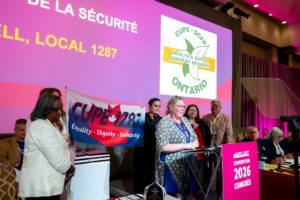
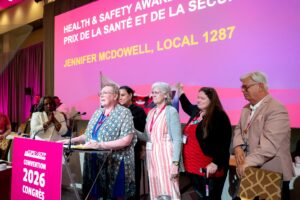
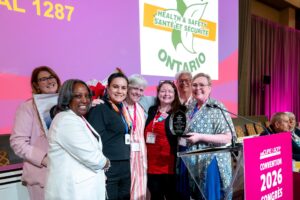
Super congratulations to our Jenn McDowell, recipient of the 2026 CUPE Ontario Health and Safety Award. ✊
Serving Local 1287 as our Joint Health and Safety Co-Ordinator and serving as Co-Chair of her employer’s Joint Health and Safety Committee, Jennifer has spent years fighting to make workplaces safer for workers across Niagara Region — leading major remediation projects, supporting members across 13 bargaining units, and never hesitating to hold employers accountable.
Her dedication to health and safety is unwavering, and deeply rooted in lived experience.
Go Jen!!!!
CUPE Ontario. “Congratulations to Sister Jennifer MacDowell, recipient of the 2026 CUPE Ontario Health and Safety Award. .” Instagram, 27 May 2026, https://www.instagram.com/p/DY2xH1olIK9/
Women Rising: Strength, Voice, Leadership Bold Women. Strong Voices. Real Change.
Friday, June 19, 2026 (5:00pm) to Sunday, June 21, 2026 (2:00pm).
Best Western, St. Catharines
2 North Service Rd, St. Catharines, ON L2N 4G9
Women Rising: Strength, Voice, Leadership is a weekend dedicated to empowering CUPE women and those who identify as such to step into their leadership, strengthen their voices, and build collective power. Grounded in the theme Bold Women. Strong Voices. Real Change., the weekend invites participants to explore what it means to lead with courage, resilience, and purpose within our union, the labour movement, and beyond. The Women Rising weekend creates space to connect with other women, build supportive relationships, and form lasting networks that participants can draw on long after the event ends.
Do you know a high school senior who might benefit from gaining insight into workplace health and safety and could use some cash towards their post-secondary education?
Applicants for the 2026 WHSC Student Scholarship Contest are invited to submit an essay, video, podcast or infographic sharing a personal experience with a hazard faced at work or one they think would put their safety or health in harm’s way. They must also share how this hazard impacted their health or could have, how their supervisor or employer responded, and what should have been considered in terms of measures to prevent hazardous exposure in the first place.
Cash awards
This annual scholarship contest is open to Ontario high school students entering full-time or part-time studies at a publicly funded Ontario post-secondary institution. The top applicant regardless of medium category for the 2026 contest will be awarded the Clifford Pilkey, WHSC Founder Memorial Scholarship and receive $6,000. The second-place applicant will be awarded the Fred Upshaw, Champion for Social Justice Memorial Scholarship and receive $4,000. Up to six additional successful applicants regardless of medium category will receive $2,000 each.
“This initiative, though, is more than just about helping students achieve their post-secondary educational goals—a challenge for many as costs continue to escalate,” says Andrew Mudge, WHSC executive director. “It serves to help enlighten each applicant about unsafe and unhealthy working conditions and encourages them to consider how hazardous exposures can be prevented. Sadly, the experiences of workers, their families, and their communities, tell us hazards are many, suffering is real and much work remains in pursuit of safer, healthier work,” Mudge adds.
Submissions are due on Wednesday, July 22, 2026.
Funding Sources No portion of government grants from employer WSIB assessments or WHSC revenue generation support these important occupational health and safety awareness initiative. Student scholarships are financed solely through funds raised at our golf tournament and the generous support of member organizations and community partners.
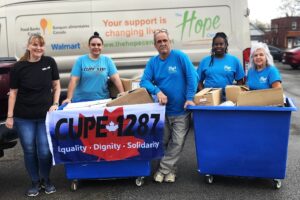
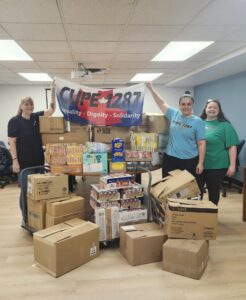
When Canadian Union of Public Employees (CUPE) 1287 put out a call for donations to support families facing food insecurity, dozens of workers of the local companies responded with food and money.
That generosity, amounting to 800 pounds, will be delivered by CUPE 1287 members to The Hope Centre in Welland on April 1
6.
The donation is part of CUPE 1287’s Strong Public Services — Strong Communities campaign and it comes at a time of significant economic uncertainty and turmoil in the Niagara Region, says a recent news release.
Food insecurity has surged in recent years, and Niagara Region food bank usage reached all-time highs in 2025. As the provincial government moves to reduce the voice of local residents and workers with strong chair powers, CUPE 1287 members are focused on giving back to their community.
The workers at The Hope Centre are also members of CUPE 1287. The donation is made on their behalf and on behalf of other CUPE 1287 members, including those who work at Canadian Mental Health Association, Town of Lincoln, Town of Pelham, City of Port Colborne, Township of Wainfleet, Township of West Lincoln, Humane Society of Greater Niagara, John Howard Society of Niagara, Niagara SPCA and Humane Society, Port Colborne Public Library, Regional Municipality of Niagara, and St. Catharines Museum.
“At a time when the voices of workers and residents are being sidelined, our members are stepping up in a different way, supporting our neighbours directly. This donation gives back to the community and honours the important work that CUPE 1287 members do at The Hope Centre every day. It’s part of our labour activism and reflects the values we hold dear as public-sector workers,” said Brenda Cervantes, president of CUPE 1287
“We are incredibly grateful to CUPE 1287 members and everyone who supported this drive for their generosity and solidarity. Donations like this make a real difference for the individuals and families we serve every day. Community support, especially in difficult economic times, is essential and this contribution will help when so many are feeling the strain,” said the Hope Centre in CUPE’s release.
Union members shared concerns regarding the Ford government’s recent announcement about major governance changes in the Niagara Region.
The Minister of Municipal Affairs and Housing said there will no longer be any directly elected councillors at the regional level.
Instead, the council will be made up of the 12 lower tier mayors and one appointed regional chair.
This means the size of council will be reduced to 13 from the previous 32.
Minister Rob Flack adding that the government will work with the region to create a weighted voting system to ensure appropriate representation.
The Regional Chair will also be granted ‘strong chair’ powers which includes the ability to appoint and dismiss the region’s Chief Administrative Officer and other division heads, as well as determine the organizational structure of the region.
All changes will take effect for the upcoming term of council.
How could these changes impact taxpayers?
Less democracy, more centralized control. Less democracy more appointed leaders with similar views and goals. Fewer elected representatives and more appointed leadership may reduce accountability and limit diverse perspectives. For example, when Bob Gale was appointed, he wrote to the province proposing amalgamation options without taxpayer consultation.
Reduced representation and increased workload. Regional councillors and mayors already manage demanding responsibilities. Concentrating governance in 12 mayors may limit their capacity to effectively represent constituents. This could lead to the need for additional staff, potentially increasing administrative costs.
Potential inequities through weighted voting. A weighted voting system may create imbalances between communities—for example, between rural and urban municipalities—affecting whose voices carry more influence in decision-making.
Lack of transparency and public consultation. Significant unknowns remain. No detailed plan has been presented to taxpayers, and there has been no meaningful public consultation. At the March 26 council meeting, it was confirmed that it was too late to include a ballot question in the October 2026 municipal election.
No clear financial or housing benefit. Minister Rob Flack has acknowledged that these changes “will not save money” and are not intended to accelerate housing development.
So, what is the real objective?
If these changes will not reduce costs, improve housing outcomes, or enhance representation, taxpayers are left asking:
Why is this restructuring being imposed without consultation?
What problem is the government trying to solve—and who truly benefits from these changes?
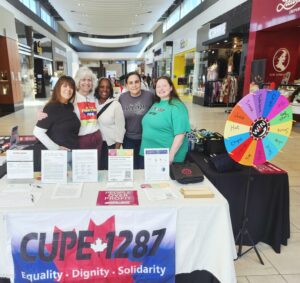
Pen Centre Information Table March 28 2026Pen Centre Information Table April 4 2026
Union members had the opportunity to engage with the Public, speaking about the work they do in our communities and the importance of it.
Social Assistance Casemanagers spoke about the vulnerable community they serve such as the challenges of affording housing with such low income. For example, a single person receives $390.00 per month to pay for rent and bills.
Child Care Workers spoke about the lack of supports from the Provincial level impacting the worker to child ratio. Children requiring specific resources to build a foundation to succeed in their school journeys fall between the cracks as a result of long waiting times and lack of funding.
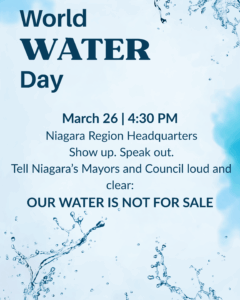
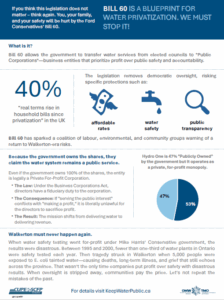
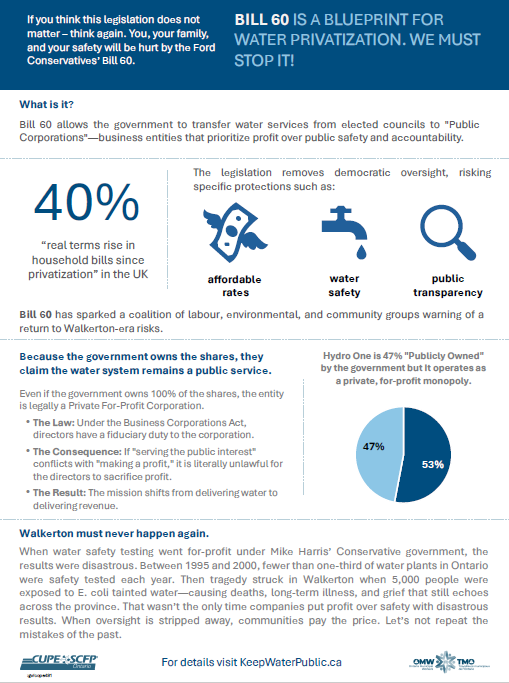
Water and Wastewater Operators spoke about the water privatization: the impacts on the environment, tourist industry, taxpayers, water cost and more.
We are going to continue setting up tables at different venues sharing the love and commitment we have for our jobs and the community we serve.
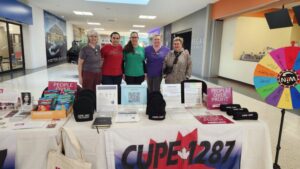
CUPE 1287 Seaway Mall Information Table March 7, 2026CUPE 1287 Seaway Mall Information Table February 21, 2026
CUPE 1287 Water Privatization and Political Amalgamation Forum – Action Needed
As we continue to engage with CUPE members and the public regarding the political amalgamation and water privatization in Niagara Region more changes have happened.
March 11th at 10:22 am 610 CKTB – CUPE opposed to Niagara amalgamation and merging of water services
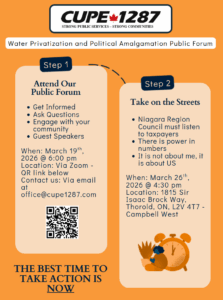
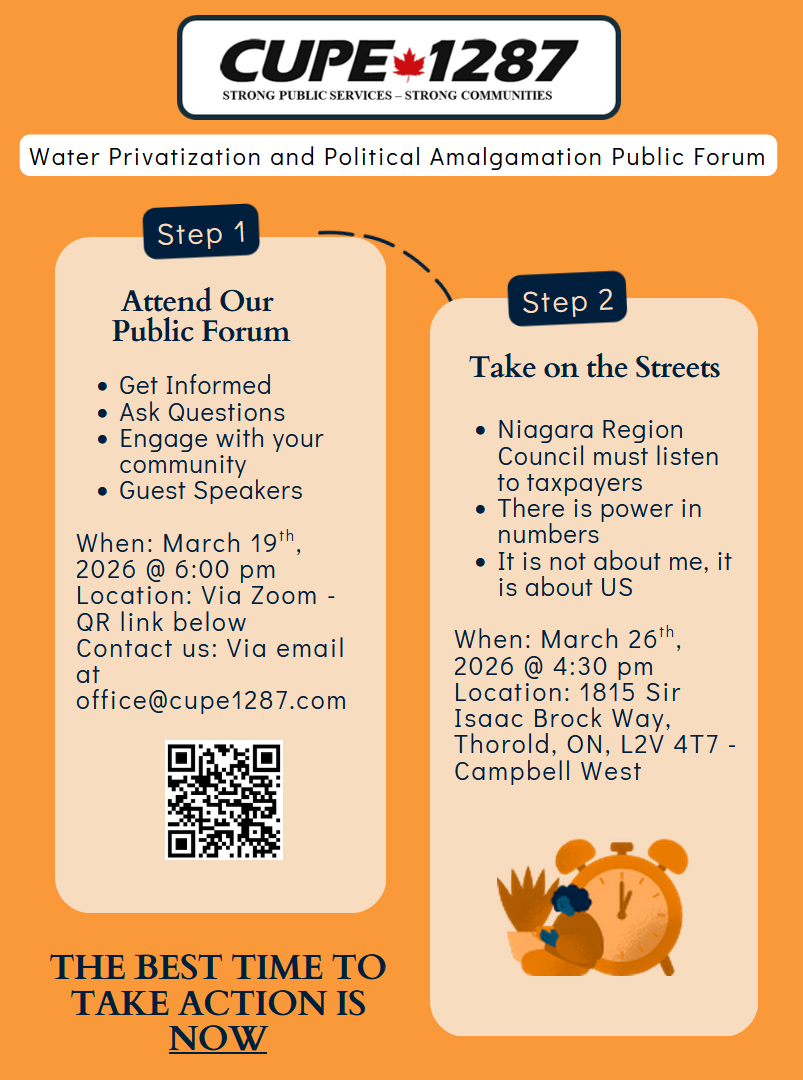
CUPE 1287 will be hosting an online public forum on March 19th at 6:00 pm. There will be guest speakers addressing political amalgamation ramifications, the socioeconomic impacts and experience of water privatization, job insecurity, democracy, representation, municipal elections and more. See attach poster with Zoom link QR code.
WE NEED TO EDUCATE OURSELVES AND THE PUBLIC, THESE ARE OUR COMMUNITIES AND WE MUST BE CONSULTED.
Action Item: Share our posters on your social media, with your loved ones and local businesses. There is strength in numbers, and we all have the responsibility to act to defend our community, environment, jobs and democracy.